
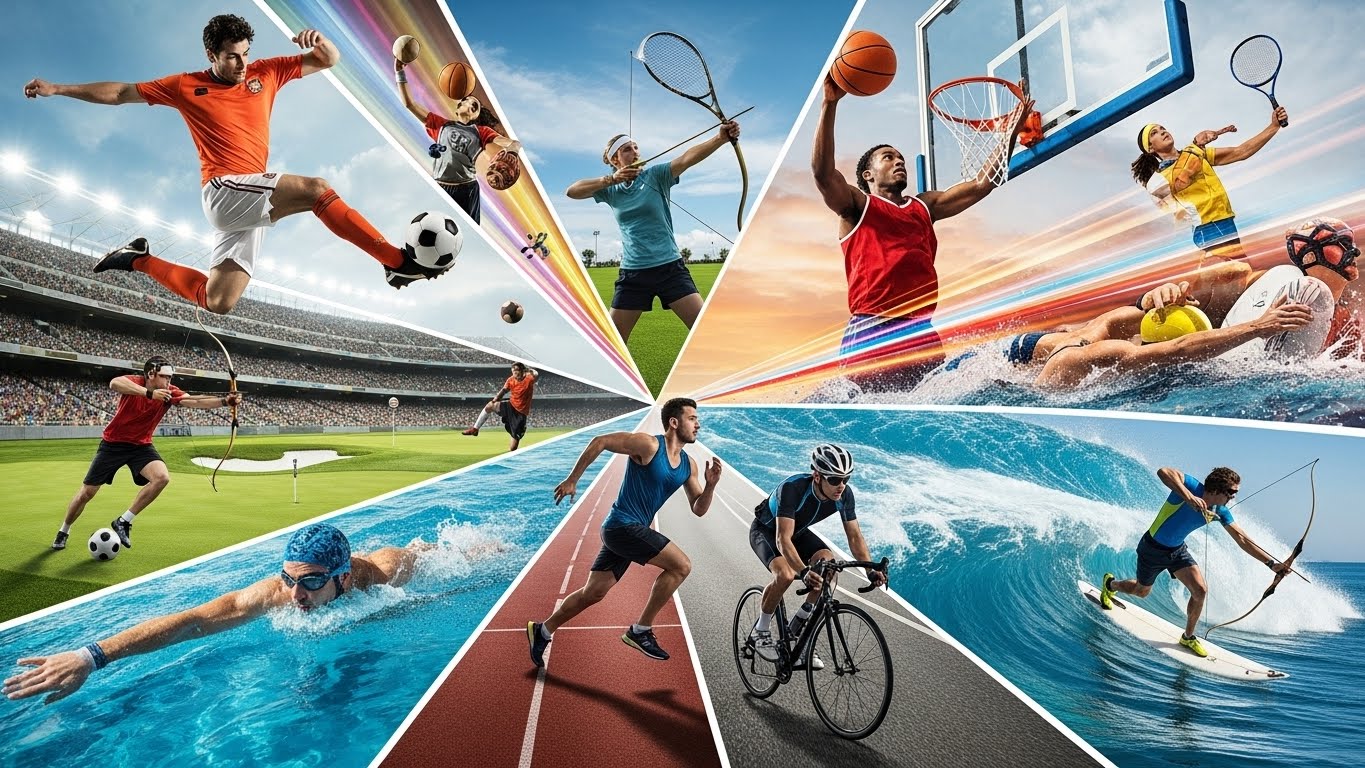
Sports have been a cornerstone of human culture for millennia, evolving alongside society’s changes in technology, communication, and global interconnectedness. From the early days of competitive ancient games to today’s globally broadcasted events that captivate millions, sports have undergone a transformation unlike any other form of entertainment. This post will explore the history of sports, the influence of technology, the rise of global sports, and how modern innovations are shaping the future of athletic competition.
The Ancient Roots of Sports
The origins of sports can be traced back to the earliest human societies. From the ancient Olympics in Greece to the gladiatorial games of Rome, humans have always been drawn to physical challenges and competition. These early sports were often rituals or displays of strength, endurance, and skill, intertwined with religious or cultural significance.
The Birth of Organized Sports
The first known examples of organized sports were the ancient Olympic Games, held in Olympia, Greece, starting in 776 BCE. These games featured a variety of athletic contests, including foot races, wrestling, and the pentathlon. Athletes competed for honor and glory, rather than material wealth, and the games were held in religious reverence to Zeus, the king of the gods. As the Olympics grew in popularity, they expanded to include other city-states, eventually becoming a pan-Hellenic event.
Roman gladiatorial contests, though darker in nature, were also a form of public spectacle where strength and bravery were on full display. The gladiators were often slaves or prisoners of war, but their battles, whether for life or death, were watched by massive crowds. These early forms of competition, though vastly different from today’s sports, laid the foundation for the idea of sport as entertainment.
The Middle Ages: A Shift in Focus
During the Middle Ages, organized sports largely disappeared in Europe, partly due to the influence of the Catholic Church, which disapproved of violent and competitive events. However, some forms of recreation remained, such as archery and jousting, which had both military and social significance. The introduction of team sports like soccer (or “football”) can also be traced back to this era, as people began to organize informal games and matches in the streets or on open fields.
The Birth of Modern Sports
The 19th century marked the birth of modern sports as we know them today. The Industrial Revolution and the spread of European colonialism played a huge role in shaping the global sporting landscape. As cities grew, so did the need for organized recreational activities that could engage the working class. Meanwhile, British colonialism spread various sports, including cricket, rugby, and soccer, to different parts of the world, where they would take root and evolve in their own unique ways.
The Industrial Revolution: Mass Participation
The Industrial Revolution, with its rise in factory work, led to increased leisure time for the working class, and organized sports began to flourish. Soccer, rugby, cricket, and baseball all began to emerge as professional sports during this period, with leagues and teams forming in major cities. The establishment of sports clubs and associations formalized the rules and regulations for games, turning informal competitions into organized events.
The Globalization of Sports
As the world became more interconnected, so did the sports played across different regions. The spread of British colonialism ensured that cricket became a major sport in countries like India and Australia, while soccer (football) became a global obsession. By the early 20th century, the first international competitions began to take shape, culminating in the establishment of the Olympic Games in 1896, which brought athletes from all over the world to compete on the global stage.
Meanwhile, in the United States, the late 19th and early 20th centuries saw the rise of uniquely American sports such as baseball, American football, and basketball. These sports, alongside the global reach of soccer and cricket, would lay the foundation for the global sports landscape we recognize today.
The Rise of Professional Sports
The 20th century saw the rise of professional sports leagues and the commercializing of sports. Teams and individual athletes began to gain mass followings, and sports became a massive industry, drawing in millions of fans from around the world. The establishment of leagues like the National Football League (NFL), Major League Baseball (MLB), National Basketball Association (NBA), and English Premier League (EPL) helped turn sports into the lucrative business it is today.
The Role of Media in Shaping Sports Culture
One of the major catalysts for the global popularity of sports was the rise of mass media. Radio broadcasts in the early 20th century allowed fans to listen to live sporting events, while the advent of television brought the action into people’s homes, enabling them to watch their favorite teams and athletes in real time.
Television changed the way people consumed sports, turning athletes into global superstars. Icons like Muhammad Ali, Pele, Michael Jordan, and Tiger Woods became household names, and their achievements transcended the sport itself. As television networks began to air live sports, they reached wider audiences, transforming sports from a regional activity to a global phenomenon.
Sponsorship and Commercialization
As sports grew in popularity, so did the involvement of corporate sponsors and advertisers. Major companies saw the opportunity to align their brand with the global appeal of sports, and sponsorship deals began to flood the market. For instance, Nike’s partnership with athletes like Michael Jordan and Serena Williams helped to turn sports apparel into a multi-billion-dollar industry.
Television networks also played a crucial role in monetizing sports, with major events like the Super Bowl, the FIFA World Cup, and the Olympic Games becoming high-profile advertising platforms. This commercialization of sports not only elevated the financial stakes but also paved the way for larger-than-life sporting events that continue to captivate millions of viewers.
The Influence of Technology on Sports
Technology has revolutionized the way we experience sports. From advances in broadcasting to innovations in training, the role of technology has been immense in shaping the modern sports landscape.
Enhanced Broadcasting and the Globalization of Sports
With the rise of cable television and satellite broadcasting, sports events are now available to global audiences in real time. No longer limited to a specific region, fans from any part of the world can tune in to watch international events like the FIFA World Cup, the NBA Finals, or the Olympic Games. Advances in broadcasting technology, such as HD and 4K television, have also enhanced the viewing experience, bringing fans closer to the action than ever before.
The use of digital platforms and social media has further amplified the reach of sports. Fans can now follow their favorite athletes on platforms like Twitter, Instagram, and YouTube, interacting with them in ways that were previously impossible.
Data Analytics and Performance Enhancement
Beyond broadcasting, technology has also transformed the way athletes train and perform. With the rise of data analytics, coaches and teams are now able to track players’ movements, analyze statistics, and develop strategies based on real-time information. Wearable devices, such as fitness trackers and GPS monitors, allow athletes to measure their physical performance, monitor recovery, and optimize their training regimens.
For example, in basketball, advanced stats like player efficiency ratings (PER) and box scores help analysts and coaches assess performance more accurately than ever before. In soccer, data analytics is used to track players’ positions, passing accuracy, and defensive contributions in real time, which can influence game strategies.
Virtual Reality and Fan Engagement
Virtual reality (VR) and augmented reality (AR) technologies are also beginning to make waves in the sports world. VR allows fans to immerse themselves in a 360-degree experience, as though they were sitting in the stadium or on the court. Some teams have even used VR to help athletes practice specific plays or improve their reaction time by simulating real-life scenarios in a virtual environment.
For fans, VR and AR provide new ways to engage with their favorite sports. Virtual experiences and interactive apps offer fans access to exclusive content, such as behind-the-scenes footage, player interviews, and interactive games. This allows sports enthusiasts to feel more connected to the action, even when they can’t be there in person.
The Future of Sports
Looking ahead, the future of sports is filled with exciting possibilities. As technology continues to evolve, so too will the ways in which we experience and consume sports. We can expect further integration of VR and AR into live events, making the experience even more immersive. Additionally, the role of artificial intelligence (AI) in analyzing player performance and predicting game outcomes will only continue to grow.
There are also trends indicating a shift toward more inclusive and diverse sports. Women’s sports, which have historically been underrepresented, are now gaining more attention and support. Leagues like the WNBA, the Women’s National Soccer League (NWSL), and the Women’s Tennis Association (WTA) have seen growing fanbases and sponsorship deals.
Moreover, esports—the competitive world of video gaming—has seen an explosive rise in popularity and is quickly becoming a mainstream form of entertainment. Esports tournaments are now broadcasted globally, and players compete for large cash prizes, making gaming a serious profession for many.
Conclusion
Sports have come a long way from their ancient origins, evolving into the global entertainment spectacles we see today. They have transcended borders, cultures, and languages to become a universal form of entertainment and competition. The rise of professional leagues, the commercialization of sports, and the influence of technology have all contributed to this transformation.
Looking forward, sports will continue to adapt to technological advances and shifting cultural dynamics. Whether through immersive virtual experiences, data-driven performance analysis, or the growing popularity of esports, the future of sports is bright and full of possibilities. The thrill of competition, the passion of fans, and the unifying power of sports will undoubtedly remain at the heart of this ever-evolving phenomenon.