
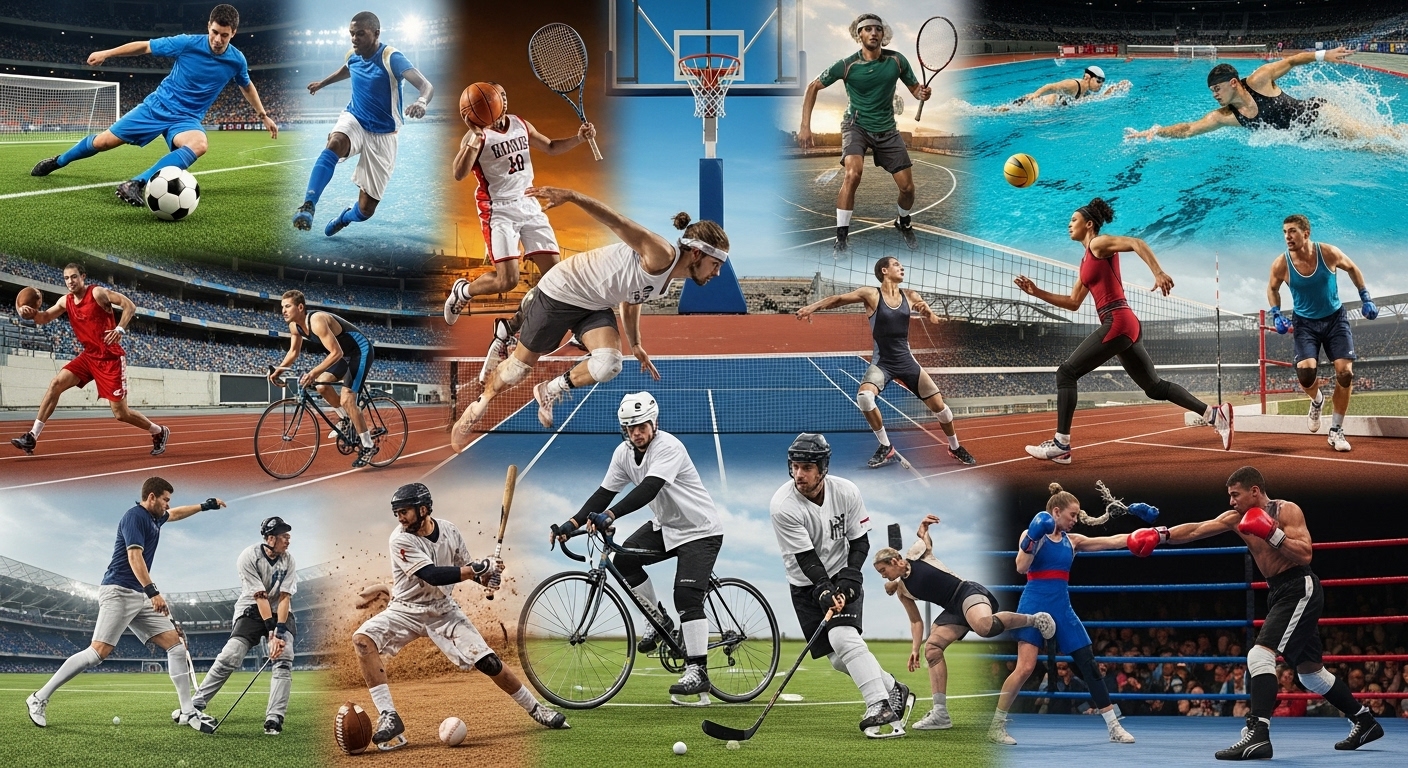
Sports have been a central part of human culture for centuries, evolving from rudimentary physical contests to complex, high-stakes competitions that dominate the global entertainment landscape. The history of sports reveals much about human nature, society, and our desire for achievement, recognition, and camaraderie. It reflects not only our physical capabilities but also the shifting cultural values and technological advancements that shape the way we interact with sports today. In this blog, we will take a detailed look at the evolution of sports, exploring their origins, growth, and how they have become a universal language that connects people from all walks of life.
The Ancient Roots of Sports: Rituals and Competitions
The origins of sports can be traced back to the dawn of civilization. The earliest recorded instances of sporting events date back to ancient cultures, where physical contests were often tied to religious rituals, celebrations, and military training. From the primitive tribes of Africa to the great empires of Egypt, Greece, and Rome, physical competitions have been integral to human society for thousands of years.
One of the earliest known organized sports events took place in ancient Egypt, where physical contests were a part of religious ceremonies. These activities included running, wrestling, and even archery. However, the most iconic and influential early sports tradition comes from ancient Greece. The Greeks organized the first Olympic Games in 776 BCE, an event that would evolve into the grand spectacle we know today. These games were not merely about athletic prowess; they were dedicated to the gods, particularly Zeus, and were held in Olympia every four years. The Greeks valued sports as an expression of human excellence and a way to honor the divine.
The Romans, known for their military discipline, also played a role in shaping the evolution of sports. Gladiatorial combat, chariot races, and other forms of public spectacles were central to Roman entertainment. These events, often brutal and bloodthirsty, were held in massive amphitheaters like the Colosseum and were a demonstration of both physical endurance and the power of the empire. While the Romans embraced physical competitions, they often leaned more toward entertainment and spectacle than the Greek ideal of sports as a pursuit of personal excellence.
The Middle Ages: A Period of Decline and Renewal
After the fall of the Roman Empire, the development of organized sports in Europe experienced a period of stagnation. During the Middle Ages, the focus of society shifted away from recreational activities as the continent faced political instability, feudalism, and the rise of Christianity. The Church viewed many forms of physical competition with suspicion, as they often involved violence or were considered distractions from religious devotion.
However, the Middle Ages were not entirely devoid of athletic activities. Tournaments such as jousting and archery contests became popular among the nobility. These contests, while primarily a form of training for warfare, were also a way to showcase physical skill and bravery. These early tournaments were often highly organized affairs, with knights competing for honor, wealth, and the admiration of the court.
Meanwhile, the common folk also enjoyed various forms of physical entertainment. Folk games like ball games, wrestling, and foot races were played in villages and towns across Europe. These activities, though less formalized, laid the groundwork for the team-based sports that would later flourish in modern times.
By the end of the Middle Ages and the beginning of the Renaissance, a renewed interest in the classics and humanism helped revive the importance of physical culture. The Renaissance period in the 14th and 15th centuries saw the resurgence of interest in the human body, which in turn gave rise to more formalized sports and athletic activities.
The Renaissance and Early Modern Period: A New Focus on Human Potential
During the Renaissance, a renewed focus on human potential and achievement began to take root. This period saw a greater appreciation for individual capabilities, whether in art, science, or physical prowess. Humanist philosophers and artists like Leonardo da Vinci and Michelangelo, who emphasized the beauty and power of the human body, helped reshape the way people viewed physical activity.
As European society shifted toward more modern ideas, various forms of sports began to gain more structure and recognition. Early forms of team sports, such as football (soccer) and cricket, began to take shape in England during the 16th century. These games, while informal at first, would later be codified into the structured sports we know today. The rules of cricket, for instance, were formalized in 1744, and football began to adopt standardized rules in the 19th century, which were crucial to the development of the modern game.
Meanwhile, in other parts of the world, traditional sports continued to thrive. In Asia, martial arts like judo, kung fu, and sumo wrestling had deep cultural and spiritual significance. These practices, which were both physical and philosophical, emphasized discipline, respect, and the mastery of the body.
The Industrial Revolution: The Birth of Modern Sports
The Industrial Revolution in the 18th and 19th centuries brought about significant changes in society, including the way people spent their leisure time. With the rise of factories and urbanization, people had more time for recreation and entertainment. This created an environment ripe for the growth of organized sports. In particular, the rise of the middle class, along with advances in transportation and communication, helped to spread sports beyond local communities and make them accessible to a broader audience.
It was during this period that many modern sports took their current form. Football (soccer) became more formalized with the establishment of the first professional football league in England in 1888. Similarly, rugby, tennis, and baseball all began to evolve in the late 19th century, with standardized rules and formal organizations being established to govern competitions.
The Industrial Revolution also saw the development of the modern Olympic Games. In 1896, the first modern Olympics were held in Athens, Greece, marking the rebirth of the ancient tradition. This event brought together athletes from around the world to compete in a celebration of global unity and athleticism. Over time, the Olympics would grow to become the largest sporting event in the world, with millions of people tuning in to watch the games every four years.
The 20th Century: Globalization and Commercialization
The 20th century witnessed the rapid globalization and commercialization of sports. Advances in technology, particularly radio and television, brought sports into the homes of millions of people around the world. Major events like the FIFA World Cup, the Super Bowl, and the Olympic Games began to attract global audiences, transforming sports into a form of mass entertainment.
This period also saw the rise of sports as a business. Corporate sponsorships, media rights, and merchandise sales turned professional sports leagues and individual athletes into multimillion-dollar industries. Athletes like Muhammad Ali, Michael Jordan, and Pelé became not only icons in their respective sports but also global brands, endorsing products and influencing pop culture.
The commercialization of sports also led to the expansion of the media’s role in shaping the sports landscape. Television broadcasts, sports journalism, and the internet all played a pivotal role in turning sports into a global spectacle. Major events such as the Olympics and the World Cup became far-reaching platforms for national pride, cultural exchange, and international competition.
Moreover, the 20th century saw the rise of women’s sports, which had long been sidelined. Female athletes began to break barriers and gain recognition, with stars like Billie Jean King, Nadia Comăneci, and Serena Williams challenging societal norms and establishing themselves as global icons. This period marked a significant shift in the inclusivity of sports, opening the door for greater gender equality in athletic competition.
The 21st Century: Technology, Diversity, and New Horizons
As we move further into the 21st century, the role of technology in sports continues to grow. Digital media, social networks, and streaming platforms have transformed the way fans engage with sports. Fans no longer have to be present in a stadium to experience the thrill of the game; they can follow their favorite teams and athletes in real time from anywhere in the world. Social media has allowed athletes to connect with their followers directly, creating a new level of intimacy between stars and fans.
Virtual reality (VR) and augmented reality (AR) are also changing the way we experience sports. These technologies allow fans to immerse themselves in the action, providing a unique and interactive experience. Moreover, esports, or competitive video gaming, has emerged as a new form of entertainment that rivals traditional sports in terms of viewership and prize money.
In terms of diversity, sports continue to evolve. More women’s sports leagues are gaining prominence, and athletes from marginalized communities are breaking down barriers and using their platforms to speak out on social and political issues. There is also a growing focus on inclusivity, with adaptive sports leagues for athletes with disabilities gaining recognition and support.
The emphasis on mental health in sports has also grown in recent years. Athletes are increasingly speaking out about the pressures they face and the importance of mental well-being. Initiatives aimed at supporting the mental health of athletes are becoming more common, reflecting a broader cultural shift towards accepting and addressing mental health issues in society.
Conclusion: The Enduring Impact of Sports
The evolution of sports from ancient rituals to modern-day spectacles is a testament to the enduring power of human competition and camaraderie. Sports not only entertain us but also shape our cultures, inspire us, and bring us together across borders and differences. Whether through the drama of a World Cup final, the elegance of a Grand Slam tennis match, or the strategy of a chess tournament, sports remain one of the most significant aspects of global culture.
As sports continue to evolve, they will undoubtedly adapt to new technological advances, social changes, and global challenges. Yet, their fundamental appeal will remain the same: the celebration of human ability, the thrill of competition, and the unifying force that sports bring to communities and nations around the world. Whether in ancient Greece, modern-day Tokyo, or online arenas,